
 Cyber Strategy
 Cyber Secure
 Cyber Operations
 Cyber Response
 Cyber Resilience
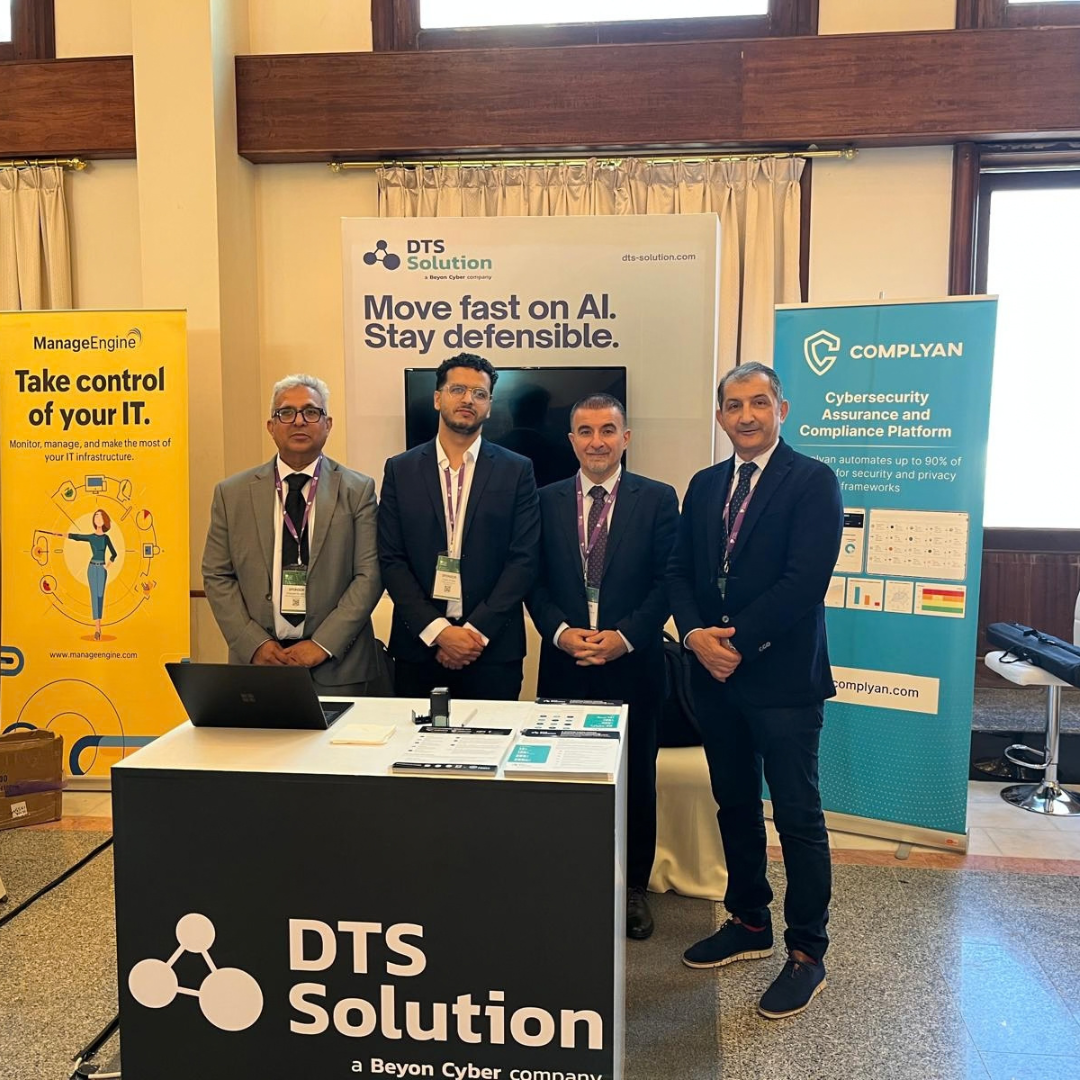
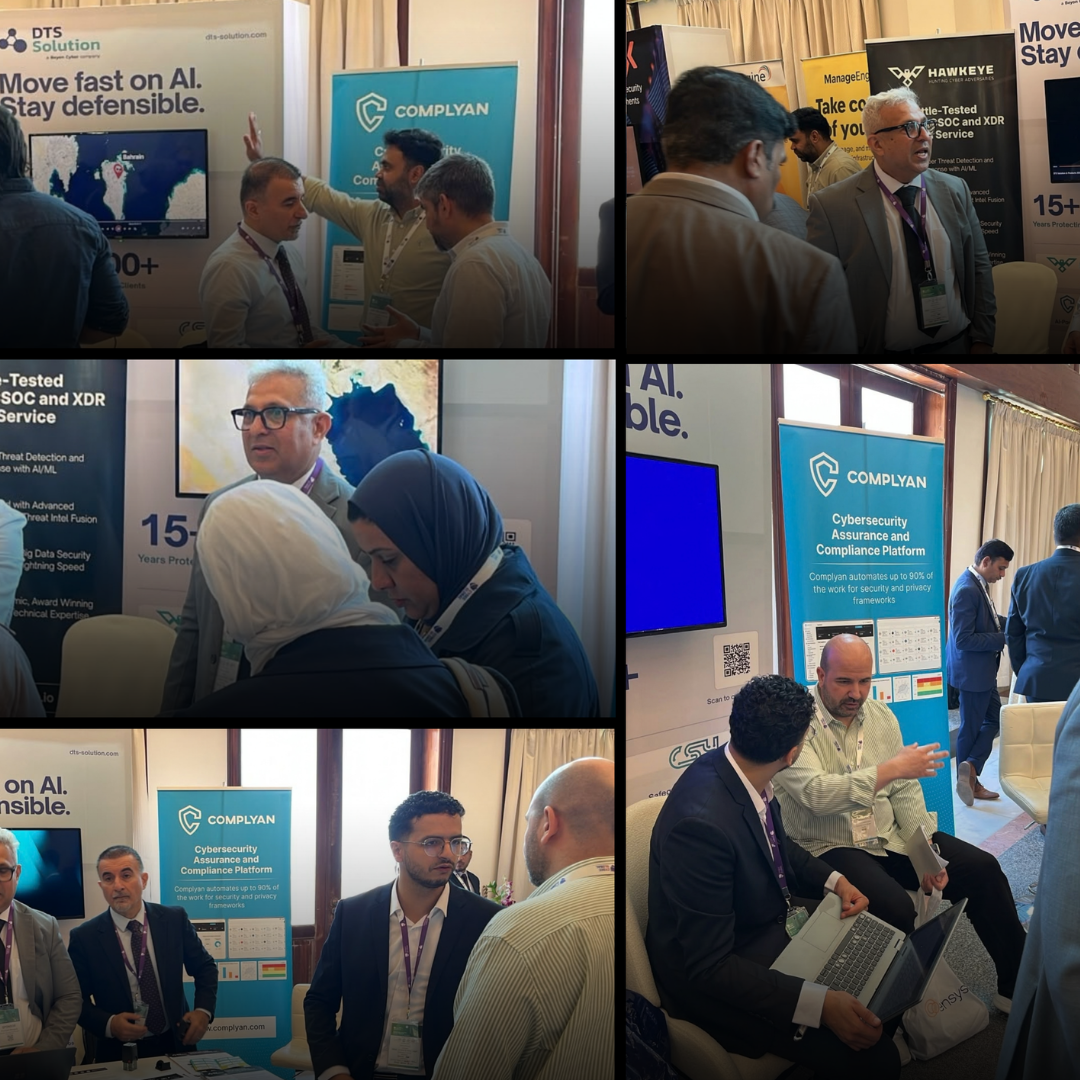
On 30 September, the DTS Solution team joined cybersecurity leaders, government stakeholders and technology decision-makers at CYSEC Kuwait 2026 in Kuwait City.
For us, the event was a useful checkpoint on what organizations across Kuwait are dealing with now. The conversations centered on cyber resilience, regulatory pressure, faster security operations and the security risks created by wider AI adoption.
These priorities closely match the work we already deliver through our Kuwait cybersecurity practice, including penetration testing, HawkEye Managed AI SOC, CBK CORF readiness, SWIFT CSP assessment, GRC, incident response and AI security.
Saudi enterprises want the speed that AI can bring to security operations, but some organizations cannot accept a model where sensitive alerts, investigation data, internal architecture, or incident evidence is sent to an external AI service for analysis.
For banks, industrial organizations, defense-adjacent companies, technology providers, and enterprises handling sensitive intellectual property, the question is becoming more specific: can an AI-powered SOC operate within the organization’s own security boundary?
That is where sovereign AI SOC architecture becomes relevant. Instead of sending security telemetry to an external model, the AI layer can run on infrastructure controlled by the organization, with local inference, defined access boundaries, auditable actions, and deployment options that can extend to fully isolated environments.
For Saudi organizations assessing this model, DTS Solution’s cybersecurity practice in Saudi Arabia brings together managed security operations, AI-driven detection, GRC, incident response, and technical assurance around the requirements of organizations operating in the Kingdom.
Cyber Resilience Is Becoming the Benchmark
A recurring question at CYSEC was simple: do the controls work when the organization is under pressure?
Security teams are being asked to prove more than policy coverage. Banks, government entities and critical infrastructure operators need evidence that attacks can be detected quickly, incidents can be contained, and essential services can continue through disruption.
This is why penetration testing and offensive security remain central to our work in Kuwait. DTS Solution tests applications, networks, cloud environments and enterprise infrastructure, while red and purple team engagements help organizations see how their controls respond to realistic adversarial techniques.
The goal is to connect technical findings with the wider resilience programme, rather than treating a penetration test as a standalone annual exercise.
HawkEye Managed AI SOC: Security Operations Built for Faster Threats
The SOC discussion has changed too. Organizations do not need more alerts. They need faster investigation, stronger context and a clear path from detection to response.
HawkEye is DTS Solution’s Managed AI SOC, combining 24/7 human-led security operations with agentic AI, XDR, automated enrichment, threat hunting and incident response.
AI accelerates repetitive analysis, correlates signals across the environment and helps reduce triage time. Human analysts remain responsible for validation, escalation and response decisions. This keeps automation focused on speed while preserving human oversight where judgement matters.
For organizations evaluating Managed AI SOC or MDR services in Kuwait, the objective is continuous visibility and faster action across endpoint, identity, cloud and other enterprise systems.
CBK CORF and SWIFT CSP: One Resilience Conversation for Kuwait's Financial Sector
For banks and financial institutions, CBK CORF and SWIFT CSP were part of the same discussion at CYSEC: how do you demonstrate that security controls are implemented, tested and capable of supporting resilience?
The Central Bank of Kuwait’s Cyber and Operational Resilience Framework places greater emphasis on cyber resilience, operational resilience and third-party risk. SWIFT users must also assess and attest against the applicable Customer Security Controls Framework.
These requirements touch many of the same systems, teams and evidence sources. Access control, vulnerability management, penetration testing, security monitoring, incident response and governance all contribute to the assurance picture.
DTS Solution supports Kuwait financial institutions across CBK CORF readiness and SWIFT CSP assessment, connecting regulatory requirements with technical testing, GRC and continuous security operations.
AI Security Is Now Part of the Core Programme
AI security was another major topic throughout CYSEC Kuwait. Organizations are deploying generative AI, LLM applications and AI agents into workflows that may have access to sensitive information and internal systems.
Through S3CURE/AI, DTS Solution supports organizations with AI governance, LLM security assessments, AI red teaming and infrastructure security. DTS Solution also holds ISO/IEC 42001:2023 certification for its Artificial Intelligence Management System.
Continuing Our Work in Kuwait
CYSEC Kuwait 2026 gave us another opportunity to speak directly with the teams shaping the country’s cybersecurity priorities.
DTS Solution maintains a local presence in Kuwait and supports organizations across offensive security, HawkEye Managed AI SOC, CBK CORF, SWIFT CSP, GRC, incident response, cyber resilience and AI security.
Need support with your cybersecurity programme in Kuwait? Talk to the DTS Solution team about the next step.
Organizations Are Prioritizing in Cybersecurity
On 30 September, the DTS Solution team joined cybersecurity leaders, government stakeholders and technology decision-makers at CYSEC Kuwait 2026 in Kuwait City.
For us, the event was a useful checkpoint on what organizations across Kuwait are dealing with now. The conversations centered on cyber resilience, regulatory pressure, faster security operations and the security risks created by wider AI adoption.
These priorities closely match the work we already deliver through our Kuwait cybersecurity practice, including penetration testing, HawkEye Managed AI SOC, CBK CORF readiness, SWIFT CSP assessment, GRC, incident response and AI security.
Cyber Resilience Is Becoming the Benchmark
A recurring question at CYSEC was simple: do the controls work when the organization is under pressure?
Security teams are being asked to prove more than policy coverage. Banks, government entities and critical infrastructure operators need evidence that attacks can be detected quickly, incidents can be contained, and essential services can continue through disruption.
This is why penetration testing and offensive security remain central to our work in Kuwait. DTS Solution tests applications, networks, cloud environments and enterprise infrastructure, while red and purple team engagements help organizations see how their controls respond to realistic adversarial techniques.
The goal is to connect technical findings with the wider resilience programme, rather than treating a penetration test as a standalone annual exercise.
HawkEye Managed AI SOC: Security Operations Built for Faster Threats
The SOC discussion has changed too. Organizations do not need more alerts. They need faster investigation, stronger context and a clear path from detection to response.
HawkEye is DTS Solution’s Managed AI SOC, combining 24/7 human-led security operations with agentic AI, XDR, automated enrichment, threat hunting and incident response.
AI accelerates repetitive analysis, correlates signals across the environment and helps reduce triage time. Human analysts remain responsible for validation, escalation and response decisions. This keeps automation focused on speed while preserving human oversight where judgement matters.
For organizations evaluating Managed AI SOC or MDR services in Kuwait, the objective is continuous visibility and faster action across endpoint, identity, cloud and other enterprise systems.
CBK CORF and SWIFT CSP: One Resilience Conversation for Kuwait's Financial Sector
For banks and financial institutions, CBK CORF and SWIFT CSP were part of the same discussion at CYSEC: how do you demonstrate that security controls are implemented, tested and capable of supporting resilience?
The Central Bank of Kuwait’s Cyber and Operational Resilience Framework places greater emphasis on cyber resilience, operational resilience and third-party risk. SWIFT users must also assess and attest against the applicable Customer Security Controls Framework.
These requirements touch many of the same systems, teams and evidence sources. Access control, vulnerability management, penetration testing, security monitoring, incident response and governance all contribute to the assurance picture.
DTS Solution supports Kuwait financial institutions across CBK CORF readiness and SWIFT CSP assessment, connecting regulatory requirements with technical testing, GRC and continuous security operations.
AI Security Is Now Part of the Core Programme
AI security was another major topic throughout CYSEC Kuwait. Organizations are deploying generative AI, LLM applications and AI agents into workflows that may have access to sensitive information and internal systems.
Through S3CURE/AI, DTS Solution supports organizations with AI governance, LLM security assessments, AI red teaming and infrastructure security. DTS Solution also holds ISO/IEC 42001:2023 certification for its Artificial Intelligence Management System.
Continuing Our Work in Kuwait
CYSEC Kuwait 2026 gave us another opportunity to speak directly with the teams shaping the country’s cybersecurity priorities.
DTS Solution maintains a local presence in Kuwait and supports organizations across offensive security, HawkEye Managed AI SOC, CBK CORF, SWIFT CSP, GRC, incident response, cyber resilience and AI security.
Need support with your cybersecurity programme in Kuwait? Talk to the DTS Solution team about the next step.
See also:





 Dubai
Dubai